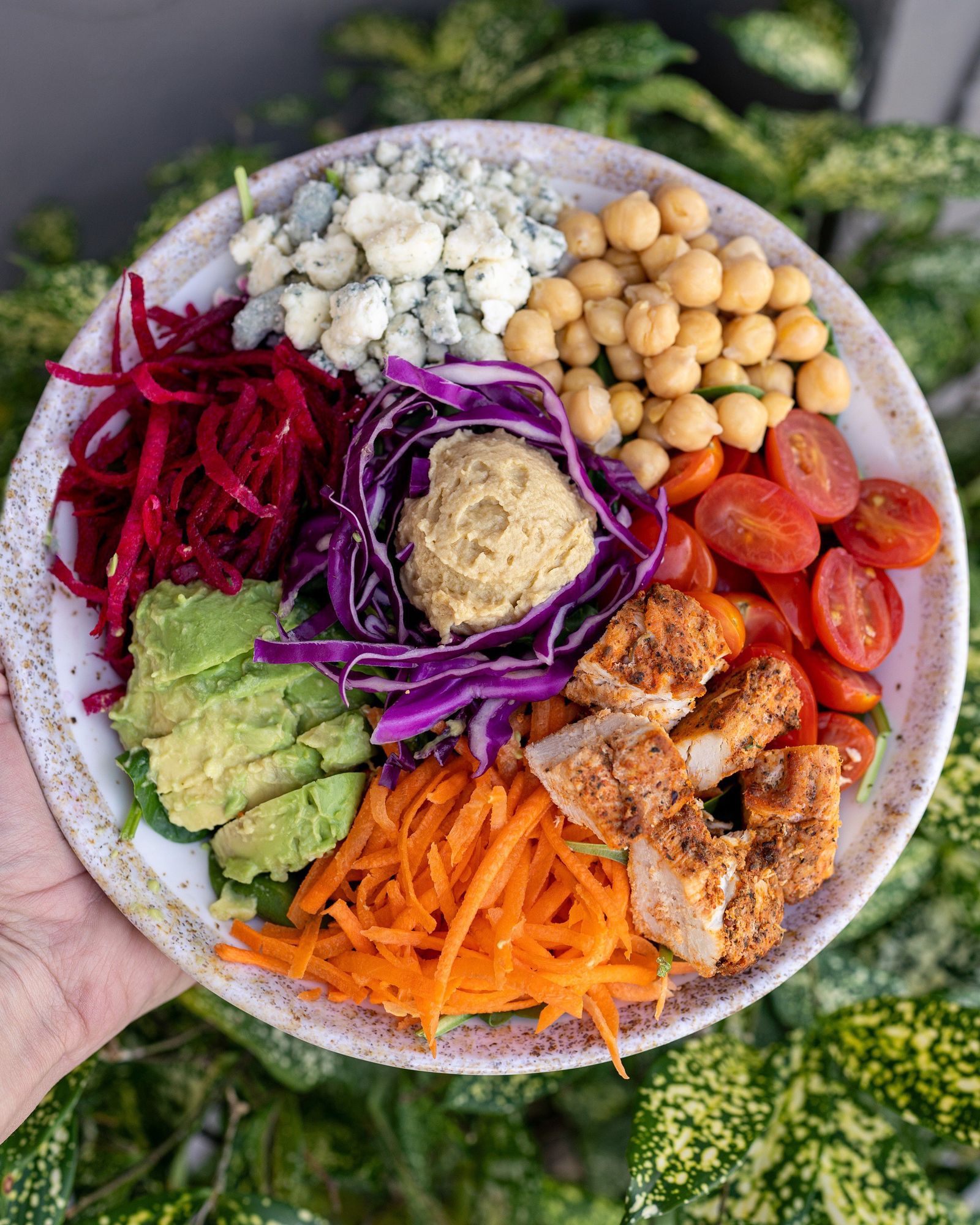
Open your calendar before choosing recipes. Mark the meals you will eat at home, the lunches you need to pack and the evenings when cooking time is short. Then give those slots a small rotation of meals you like.
Fill the week you actually have
Write breakfast, lunch and dinner across seven days. Mark meals already covered by a restaurant, a work event or something you own. On the remaining spaces, write the real constraint: cold lunch, no stove, five minutes, or a little more time. This prevents an attractive recipe from taking a slot where it cannot work.
Keep breakfast simple: two choices are enough for a starting rotation. Spend more attention on lunch if you need to pack it or eat away from home.
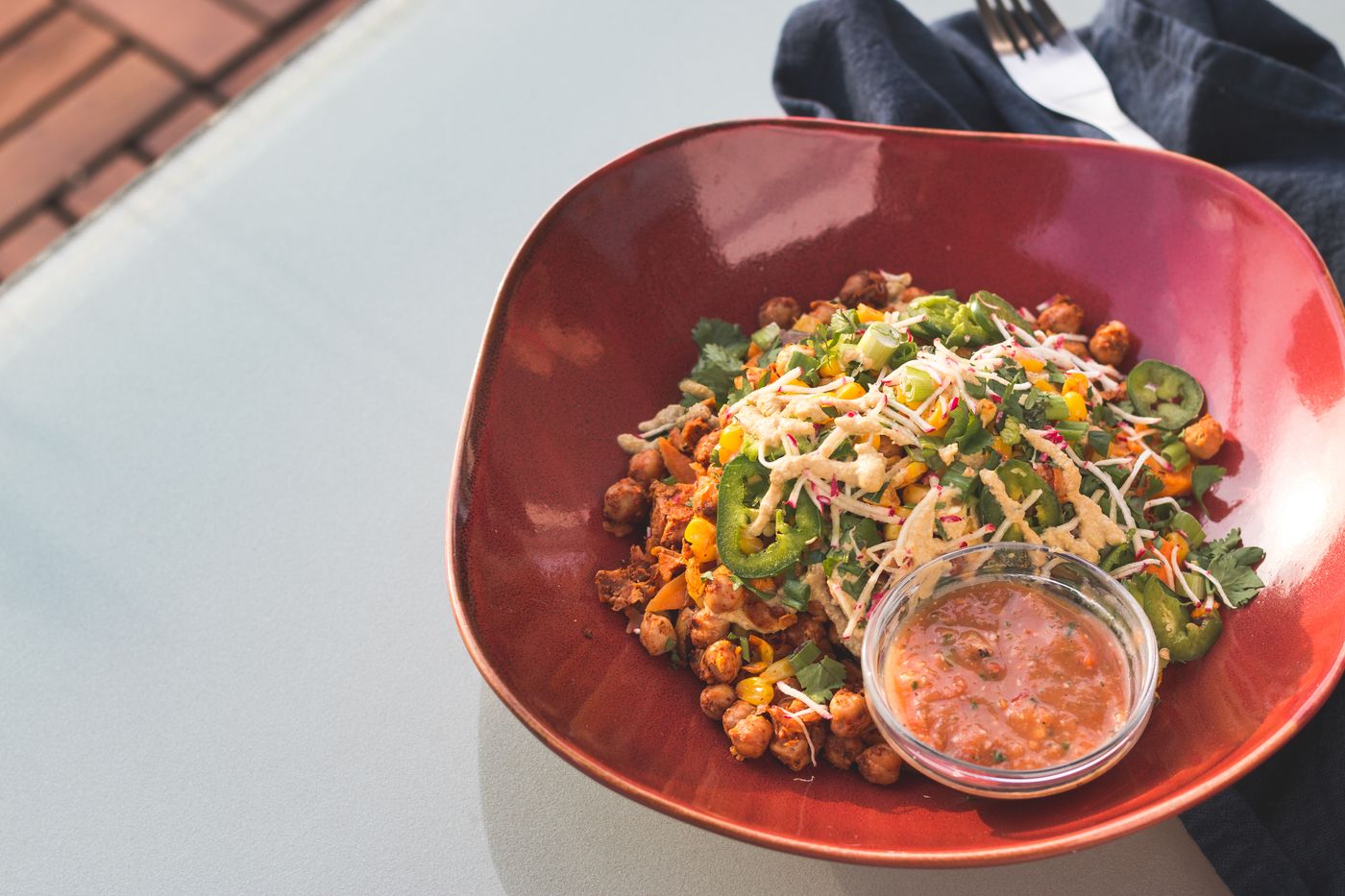
Try this small starter rotation
| Meal | Estimated minutes | kcal | Protein, g | Carbohydrate, g | Fat, g |
|---|---|---|---|---|---|
| Berry & yogurt oat bowl | 5 | 449 | 33.9 | 55.5 | 11.8 |
| Apple cottage cheese bowl | 5 | 494 | 30.3 | 58.8 | 17.3 |
| Five-minute chickpea hummus bowl | 5 | 542 | 23 | 77.7 | 17.5 |
| Chicken hummus pita | 7 | 561 | 50.6 | 58.2 | 15.7 |
| Warm lentil quinoa bowl | 8 | 500 | 25.3 | 77.1 | 12.1 |
Use the two breakfasts on alternating mornings. Put the chickpea bowl on a no-reheating lunch day, the pita on a day when you have chilled ready-cooked chicken, and the lentil bowl on an evening with a microwave. These are examples of slots, not a prescribed daily intake or a claim that everyone needs the same portions.
Add up the meals, then check the cupboard
Read each ingredient state carefully. The quinoa in these bowls is already cooked. The chicken in the pita is already cooked and suitable for eating cold. Buying dry grain and raw chicken changes the work involved.
Add the amounts across the meals you actually selected, subtract usable food already in your kitchen, and then compare the remainder with package sizes. A combined recipe list tells you ingredient weights; it cannot know whether you already have half a cucumber or whether your store sells smaller tubs.
Keep one fallback meal
Choose one meal you can assemble from ingredients you normally buy. If a meeting runs late, use that meal and move the original dish to another appropriate slot. Recheck the shopping list after a swap so you do not buy both sets of ingredients by accident.
After the first few meals, keep the ones that worked and replace the awkward ones. That gives the next week a much easier starting point.
Questions before planning the week
Do I need seven different dinners?
No. A small rotation can be easier to use. Repeat meals you enjoy and change the ones that do not fit your week.
Is a weekly plan the same as meal prep?
No. Planning decides what to eat; meal prep does some cooking ahead. You can plan a week while preparing each meal when needed.
Related reading: A Grocery List for One That Reuses Ingredients · Meal Planning Without Spending Sunday Batch Cooking
Build a personal week with recipes, portions and a shopping list. Your first week stays free, with no card required. Subscription options cover further planning.
Recipe times are planning estimates, not kitchen-tested guarantees. They assume the prepared ingredients named in each recipe. Nutrition is calculated from our local USDA SR Legacy ingredient references; your package labels and actual portions can differ.
Your first week is on us.
Recipes for one, calculated portions and one shopping list. No card needed. Quick recipes use ready-cooked ingredients; prep times are estimates.
Build my free week ↗Sources and method
Recipe calculations use our ingredient catalogue. Reference averages and estimates differ from package labels. The sources below support the practical guidance; they do not endorse Dayfork.